
Probate Court Records in Kandiyohi County
Kandiyohi County probate court records are on file at the District Court in Willmar. The court manages estate cases, admitted wills, guardianship and conservatorship proceedings, and trust matters for residents throughout the county. Records filed July 1, 2015 and later are available at no cost through Minnesota Court Records Online. Older Kandiyohi County probate records require a visit to the Willmar courthouse or a direct request to the court.
Kandiyohi County Overview
Kandiyohi County District Court
The Kandiyohi County District Court in Willmar is part of Minnesota's Eighth Judicial District. Court Administrator Kathy Narlock manages court operations. The Eighth District covers west-central Minnesota and includes several surrounding counties. Free parking lots and on-street parking are available near the Willmar courthouse. The court is open weekdays and handles all case types, including probate.
| Court Name | Kandiyohi County District Court |
|---|---|
| Address | 505 Becker Ave SW, Willmar, MN 56201 |
| Phone | (320) 231-6200 |
| Hours | Monday–Friday, 8:00 AM – 4:30 PM |
| Court Administrator | Kathy Narlock |
| Judicial District | Eighth |
The court's probate docket covers all estates, guardianships, conservatorships, and trust proceedings filed by Kandiyohi County residents. There is no satellite court for probate matters; all filings go through the Willmar courthouse on Becker Ave SW.
Search Kandiyohi County Probate Filings
Start with MCRO for any Kandiyohi County probate record filed after July 1, 2015. You can search by name, case number, or case type. Most probate records are public unless a judge has sealed them. Older records are not in MCRO and must be obtained directly from the court or through the Minnesota Historical Society.
The MNHS probate records research guide explains what historical records the Society holds for Minnesota counties, including older Kandiyohi County estate files and will books. Their collections cover the period from 1849 through roughly the mid-1980s. After that point, the courts hold the records exclusively.
The Minnesota Courts probate help page is a practical resource for anyone who is new to the probate process. It covers the difference between informal and formal cases, how to use the forms, and what to expect at each stage of a probate proceeding in Minnesota.
Kandiyohi County Probate Records: Content and Uses
Probate records in Kandiyohi County document how a person's property was handled after their death under court supervision. When someone dies leaving assets in their name alone and those assets are above the small estate threshold, the estate must go through probate. The District Court in Willmar creates a permanent file for each case that typically includes the petition, any original will, letters testamentary or administration, an asset inventory, creditor claim records, and a final distribution order.
Guardianship cases are a second major category in Kandiyohi County's probate records. These arise when a court determines that a person cannot manage their own personal decisions due to incapacity, disability, or age. The court appoints a guardian who must report to the court periodically. Conservatorship cases are parallel but focus on financial management rather than personal care. Both types of records are public as a general rule.
Trust proceedings that require judicial oversight, such as formal accountings or disputes between beneficiaries and trustees, also become part of the probate record. Researchers and family members use Kandiyohi County probate records to trace inheritances, identify beneficiaries, and document how property moved through generations. Estate inventories from older cases can be especially useful for genealogical research.
How to File Probate in Kandiyohi County
Minnesota allows two types of probate: informal and formal. Informal probate is handled by the court registrar without a judge hearing. It works when there is a clear will, no disputes, and a relatively simple estate. Formal probate requires a judge and a scheduled hearing. It applies when heirs disagree, the will is contested, or the estate has complex or disputed assets.
To open an estate in Kandiyohi County, file the appropriate forms at the District Court in Willmar. All Minnesota probate forms are available at mncourts.gov/getforms/probate/. The filing fee for the first paper is $325. This covers estates, trusts, guardianships, and conservatorships. Depositing a will for safekeeping without opening an estate costs $27. Certified copies of filed documents are $14 each. Uncertified copies are free. These are statewide fees that apply equally in Kandiyohi County.
Under Minn. Stat. § 524.3-108, most probate proceedings must be completed within three years of the decedent's death. Starting early avoids potential legal complications down the road.
Kandiyohi County Probate Court and Fee Reference
The screenshot below shows the Kandiyohi County District Court page on the Minnesota Courts website. It has the court's address, hours, and contact details.
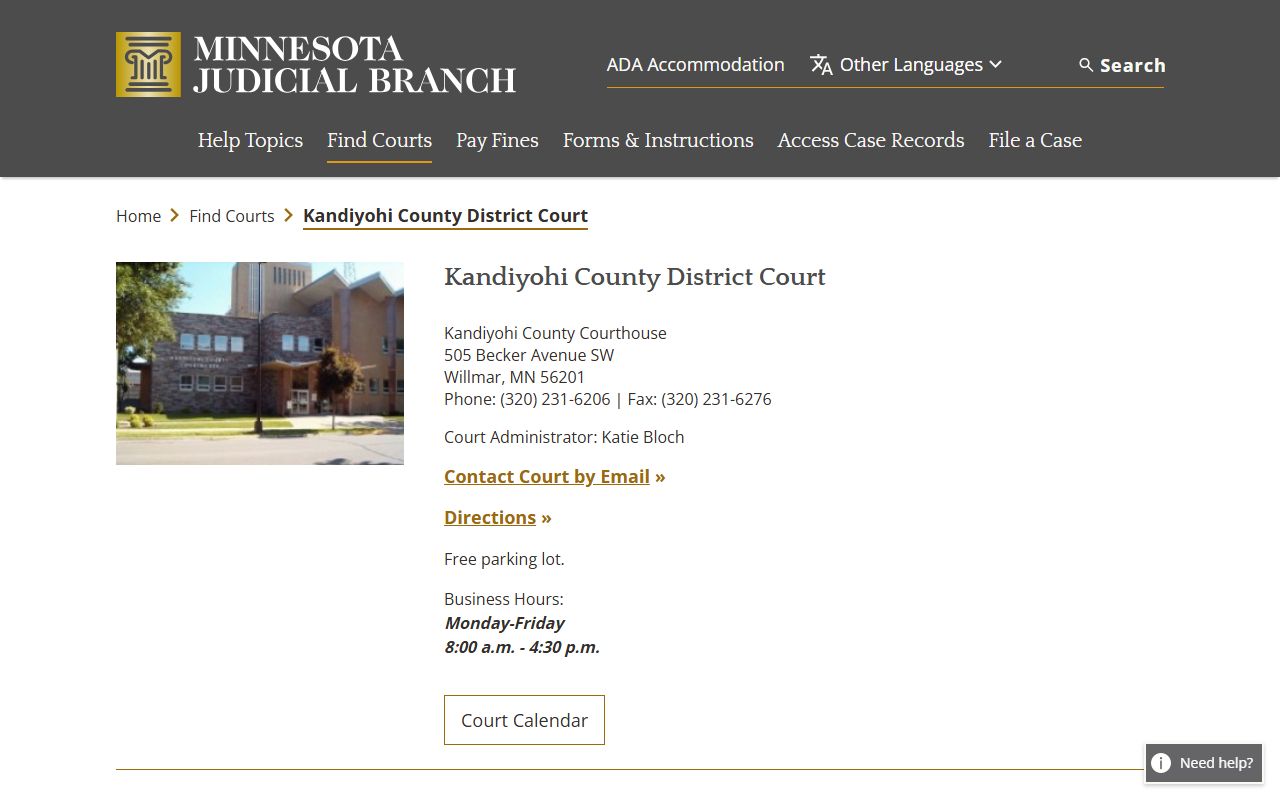
Check this page before visiting Willmar in person or calling the court, as hours and contact information are kept current there.
The screenshot below is from the Kandiyohi County court fee schedule, showing current probate filing costs.
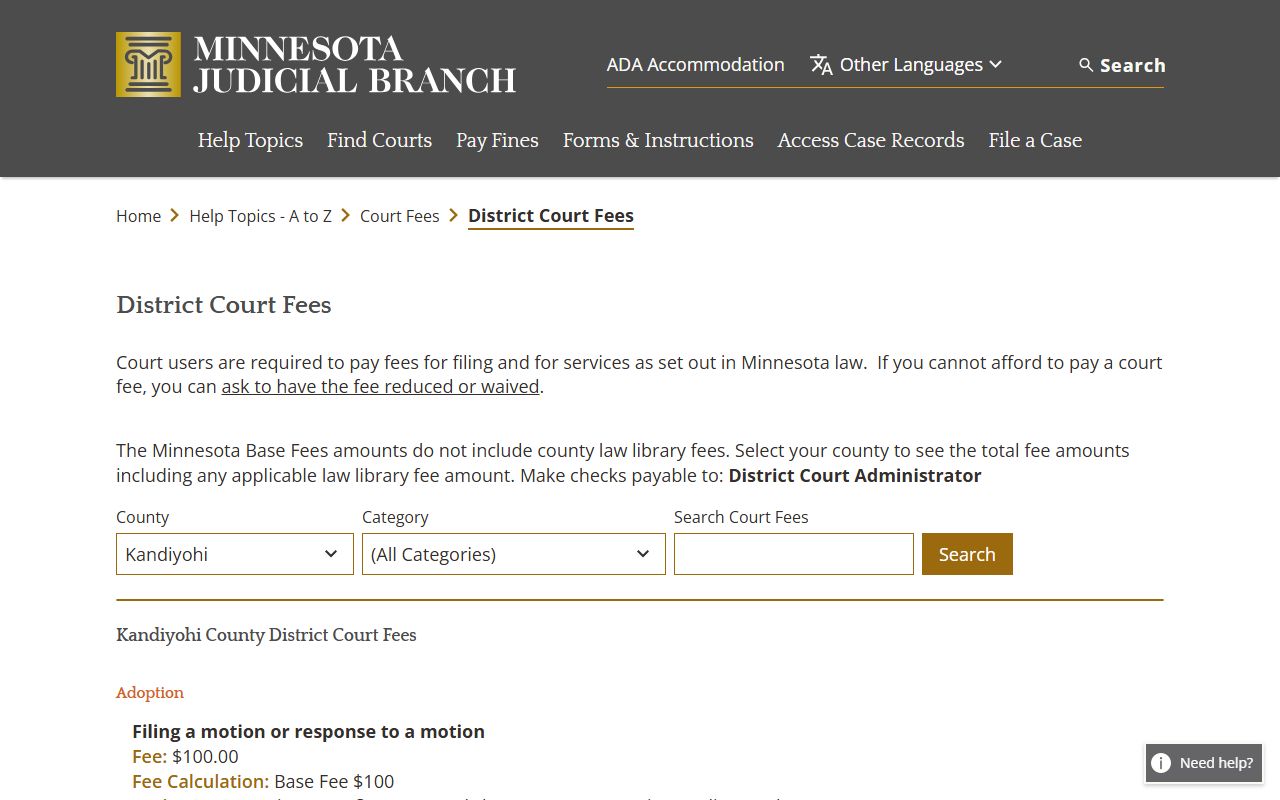
The fee page confirms the statewide probate fee structure: $325 first paper, $27 will deposit, $14 certified copy, and free uncertified copies. These fees apply to all probate case types at the Willmar courthouse.
Small Estate Process and Creditor Claims
Kandiyohi County estates made up entirely of personal property worth under $75,000 may skip formal probate. The small estate affidavit under Minn. Stat. § 524.3-1201 lets an heir collect assets by presenting a sworn statement directly to the holding institution. This works 30 or more days after the death. It does not apply to real estate. The form to use is PRO201/PRO202, available at mncourts.gov. There is no court filing and no filing fee for the small estate process.
Creditors seeking to file claims against a Kandiyohi County estate must act within the window set by Minn. Stat. § 524.3-803: four months from published notice or one year from death, whichever comes first. After that, most claims are time-barred. Personal representatives handling Kandiyohi County estates should follow the notice publication steps carefully so the creditor window opens and closes properly. The full Minnesota probate statute is at Minn. Stat. Chapter 524. Free legal resources are available at the Minnesota State Law Library.
Cities in Kandiyohi County
Willmar is the county seat and largest city in Kandiyohi County. Other communities include New London, Spicer, Raymond, and Atwater. None of these cities reach the population threshold for a dedicated city page, but all Kandiyohi County residents file probate matters at the District Court in Willmar.
Nearby Counties
Kandiyohi County borders several west-central Minnesota counties, each with its own District Court for probate filings.