
Apple Valley Probate Court Records
Apple Valley probate court records are handled by Dakota County District Court, which serves all of Dakota County. Apple Valley has a notable advantage for residents: Dakota County's Western Service Center is located right in the city, providing a closer option for some county services. This page covers how to search probate records, where to file, what documents are kept, and how the process works for Apple Valley residents.
Apple Valley Overview
Apple Valley Probate Court Location
Apple Valley is in Dakota County, and all probate matters for Apple Valley residents are handled by Dakota County District Court within the First Judicial District. The main courthouse is in Hastings, the county seat, at 1560 Highway 55. Dakota County also operates a Western Service Center at 14955 Galaxie Ave. West in Apple Valley itself. That location houses multiple county departments and serves residents on the west side of the county.
For probate filings, the Western Service Center at (952) 247-7099 can be the closer and more convenient option for Apple Valley residents. That office is open Monday through Friday, 8 a.m. to 4:30 p.m. The City of Apple Valley does not handle probate matters. Those go through Dakota County District Court.
| Court | Dakota County District Court |
|---|---|
| Main Address | 1560 Highway 55, Hastings, MN 55033 |
| Phone | (651) 438-4338 |
| Western Service Center | 14955 Galaxie Ave. West, Apple Valley, MN 55124 |
| WSC Phone | (952) 247-7099 |
| WSC Hours | Monday-Friday, 8:00 a.m. - 4:30 p.m. |
| Court Website | mncourts.gov - 1st District |
Note: Dakota County adds a $10 law library surcharge to the state base fee, making the total first-paper filing fee $320.
Search Apple Valley Probate Records Online
The main online search tool is Minnesota Court Records Online (MCRO). It is free and does not require registration for basic case lookups. You can search by party name, case number, or attorney. Results include case status, scheduled hearings, and documents linked to the case.
What you can access depends on when records were filed. Probate cases filed on or after July 1, 2015 offer full document access. Cases from July 1, 2005 through June 30, 2015 provide limited access, showing mainly orders and notices. Records filed before 2005 are not online and must be requested from the court. MCRO is available at any hour, which makes it a good first step before visiting a courthouse. For older records, contact Dakota County District Court directly at (651) 438-4338.
The Minnesota Judicial Branch probate help page offers guidance on understanding what different case types and statuses mean when you run a search.
The City of Apple Valley website provides information on municipal services. Probate filings for Apple Valley residents go to Dakota County District Court.
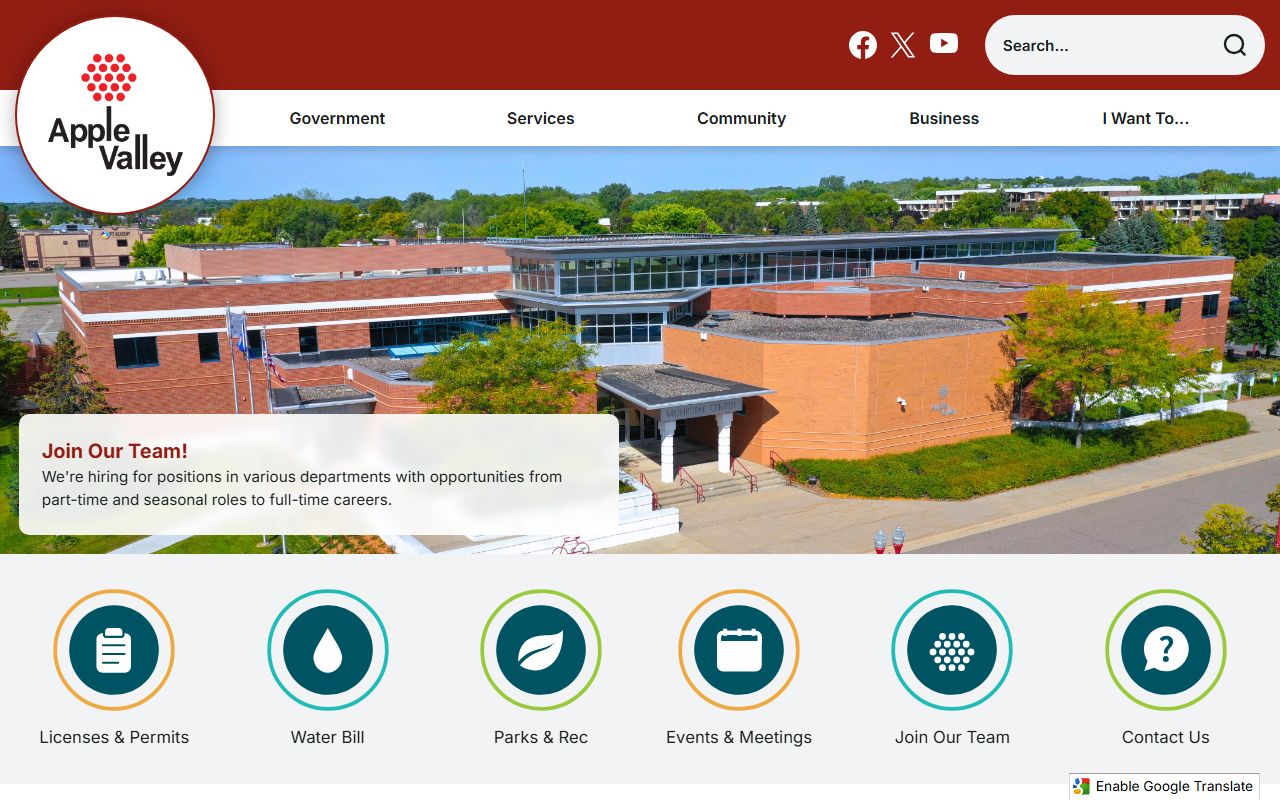
Apple Valley residents have the convenience of a Dakota County Western Service Center located in the city at 14955 Galaxie Ave. West, providing nearby access to county court services.
What Apple Valley Probate Records Include
Dakota County probate case files hold documents generated during estate administration. A standard estate file typically contains the opening petition, the will if one was filed, letters testamentary or letters of administration, an inventory of the decedent's property, creditor notices, accountings, and the final distribution decree. Cases that involve disputes or complex assets will have additional documents on file.
Guardianship and conservatorship files differ in content. Those include the initial petition, court orders appointing the guardian or conservator, and annual reports submitted each year. Some recent guardianship records carry restricted access under state court rules. Public estate records are open once a case is active. Anyone may view or request copies. Certified copies cost $14 per document and are free for uncertified versions at most Dakota County service locations.
Probate Filing Process for Apple Valley Residents
When an Apple Valley resident dies, their estate may need to go through probate. Whether probate is required depends on the type and value of their assets. Under Minnesota Statute 524.3-1201, estates with $75,000 or less in personal property and no real estate can use a small estate affidavit rather than opening a full court case. The law requires a 30-day waiting period after the death before using this process.
Estates with real property or larger values go through informal or formal probate. Informal probate moves forward without a court hearing in most cases. Formal probate involves a judge and a scheduled hearing. Both types are filed at Dakota County District Court. Minnesota's Chapter 524 Uniform Probate Code governs all probate proceedings in the state.
Free court forms are available at Minnesota Courts probate forms. The PRO201-202 packet is for small estate affidavits. The PRO1201-1206 packet is for formal probate with a will. Probate must be started within three years of the date of death.
Legal Help for Apple Valley Probate Cases
Apple Valley residents have several options for help with probate. The statewide self-help line at (651) 435-6535 provides guidance on forms and procedures Monday through Friday during business hours. The Minnesota State Law Library at (651) 297-7651 runs a Probate Brief Advice Clinic on the first Thursday of each month, offering free short consultations with a lawyer.
LawHelpMN connects residents with legal aid organizations based on income and location. The Minnesota State Bar Lawyer Referral Service can match you with a licensed attorney if you need more than guidance on forms. For historical estate or genealogy research, the Minnesota Historical Society holds will books and historical probate records for most Minnesota counties, though records for older cases may need to be requested through the court directly.
Dakota County Probate Court Records
Apple Valley probate cases are filed at Dakota County District Court. For more on the county court, fees, and procedures, visit the Dakota County page.
Nearby Cities
Other Dakota County cities and nearby communities file probate cases through county district courts.