
Find Probate Records in Itasca County
Itasca County probate court records are filed and maintained at the District Court in Grand Rapids. The court handles estate cases, will filings, guardianships, conservatorships, and trust proceedings for residents throughout the county. Many Itasca County probate records filed after July 1, 2015 are available through Minnesota Court Records Online at no cost, and the courthouse is open to the public on weekdays during regular business hours for older records and in-person searches.
Itasca County Overview
Itasca County District Court
The Itasca County District Court is part of Minnesota's Ninth Judicial District. It holds original jurisdiction over all civil, criminal, family, probate, juvenile, and traffic cases filed in the county. Court Administrator Renelle Fenno oversees day-to-day operations. A public access computer on the second floor lets you look up case information at no charge. Court calendars post each business day at 7:00 a.m. and update hourly.
| Court Name | Itasca County District Court |
|---|---|
| Address | 123 NE 4th Street, Grand Rapids, MN 55744 |
| Phone | (218) 327-2870 |
| Hours | Monday–Friday, 8:00 AM – 4:30 PM |
| Court Administrator | Renelle Fenno |
| Judicial District | Ninth |
Free surface parking and on-street parking are available near the courthouse. If you plan to visit in person, bring a photo ID and any relevant case numbers you have. The clerks can help you locate filings and explain what documents are on file, but they cannot give legal advice.
Search Itasca County Probate Records Online
The Minnesota Court Records Online (MCRO) portal is the main tool for searching Itasca County probate records remotely. It covers documents filed on or after July 1, 2015. You can search by party name, case number, or filing type. Most probate records in MCRO are public. Some documents, like mental health filings or certain sealed records, may be restricted under court rules.
For older Itasca County probate records, you need to contact the court directly. The Minnesota Historical Society also holds historical will books and probate records from many Minnesota counties, including Itasca. Their probate records guide explains what is available and how to request copies. Note: MNHS collections generally cover records from 1849 through the mid-1980s.
The Minnesota Courts probate help page walks through the full process and links to forms, definitions, and guidance documents for anyone dealing with an Itasca County estate.
Probate Court Records in Itasca County: What They Cover
Probate records in Itasca County document the legal process that transfers property after someone dies. When a person passes away owning assets in their name alone, those assets generally need to go through probate before they can be passed to heirs or beneficiaries. The Itasca County District Court oversees this process and keeps a permanent record of every case filed.
These records typically include the original petition to open the estate, any will submitted for probate, court orders appointing a personal representative, an inventory of assets, and a final accounting showing how the estate was distributed. Guardianship and conservatorship cases are also part of the probate docket. Those records cover situations where a court appoints someone to manage the finances or personal care of a person who cannot do so on their own.
Trust proceedings can also come through the probate court if a dispute arises or if a formal accounting is needed. Itasca County probate records are a valuable resource for family members, estate attorneys, and genealogists researching family property and inheritance history.
Filing Probate Cases in Itasca County
Minnesota law gives you two main paths for probate: informal and formal. Informal probate is handled by the court registrar without a hearing. It works when the will is straightforward and there are no disputes. Formal probate requires a judge and a court hearing. It applies when there are questions about the will's validity, disagreements among heirs, or complex estate issues that need judicial oversight.
To start a case in Itasca County, you file the appropriate forms with the District Court in Grand Rapids. The Minnesota Courts website provides all the forms you need at mncourts.gov/getforms/probate/. For formal probate with a will, the main packet is the PRO1201-1206 series. The filing fee to open a probate estate is $325 (base $310 plus a $15 law library fee). Will deposits cost $27. Certified copies of any court document are $14 each. Uncertified copies are free.
Note: Minnesota's Minn. Stat. § 524.3-108 sets a three-year limit on most probate proceedings. Filing promptly after a death avoids complications.
Small Estate Options for Itasca County Residents
Not every Itasca County estate requires full probate. If the total personal property is under $75,000 and at least 30 days have passed since the death, heirs may use a small estate affidavit to collect assets without opening a formal court case. This option does not cover real estate. The relevant statute is Minn. Stat. § 524.3-1201.
The form to use is the PRO201/PRO202 packet, available at mncourts.gov. The affidavit goes to the institution holding the asset, such as a bank, not to the court. There is no filing fee. This can save significant time and cost for smaller, simpler estates in Itasca County.
Itasca County Probate Fees and Document Access
The court's Itasca County District Court page has current contact information, and you can confirm fee schedules by reviewing the Itasca County court fee schedule on the Minnesota Courts website. Fees shown there reflect the current statewide structure.
The screenshot below was captured from the Itasca County court fees page, showing the current probate filing costs.
View the Itasca County court fee schedule on mncourts.gov
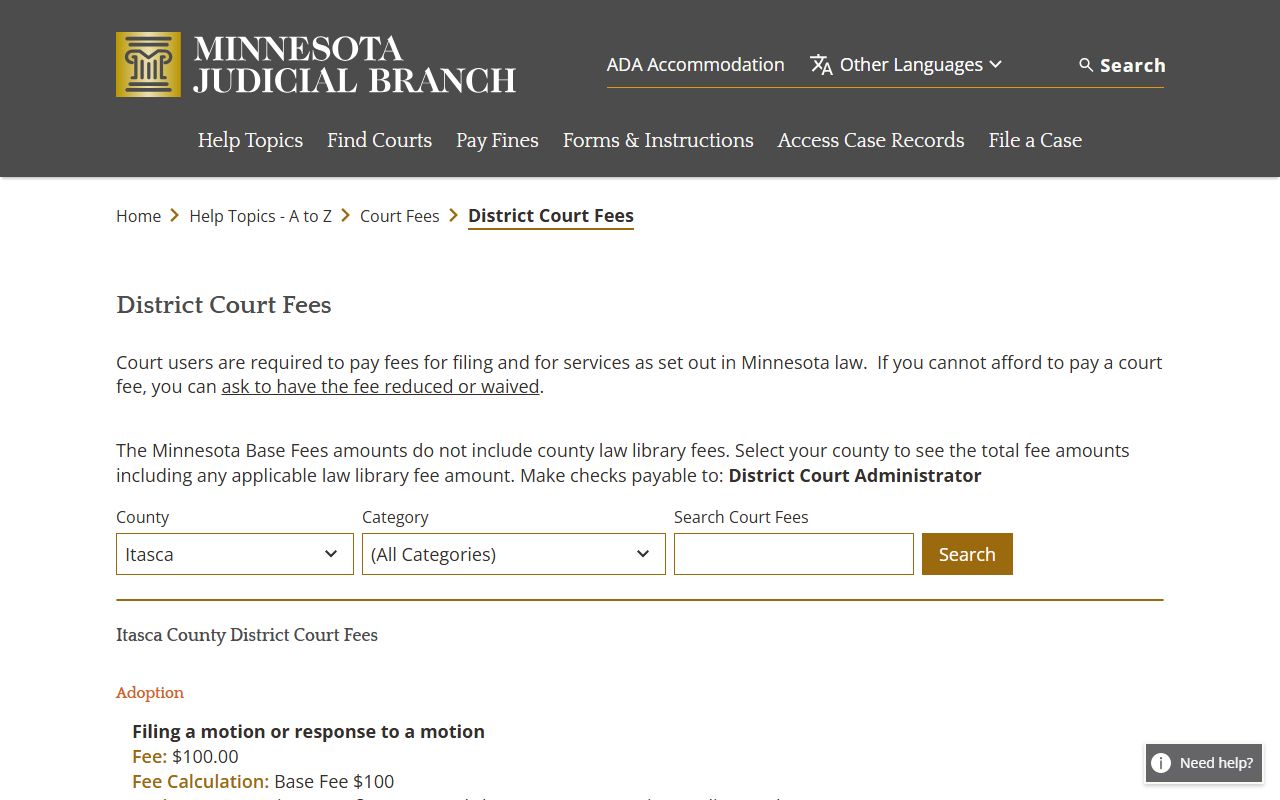
The fee page confirms the $325 first-paper fee for estates, trusts, guardianships, and conservatorships, along with a $27 will deposit and $14 per certified copy.
The next screenshot shows the Itasca County District Court information page, which lists the courthouse address, phone number, and office hours.
Visit the Itasca County court page on mncourts.gov
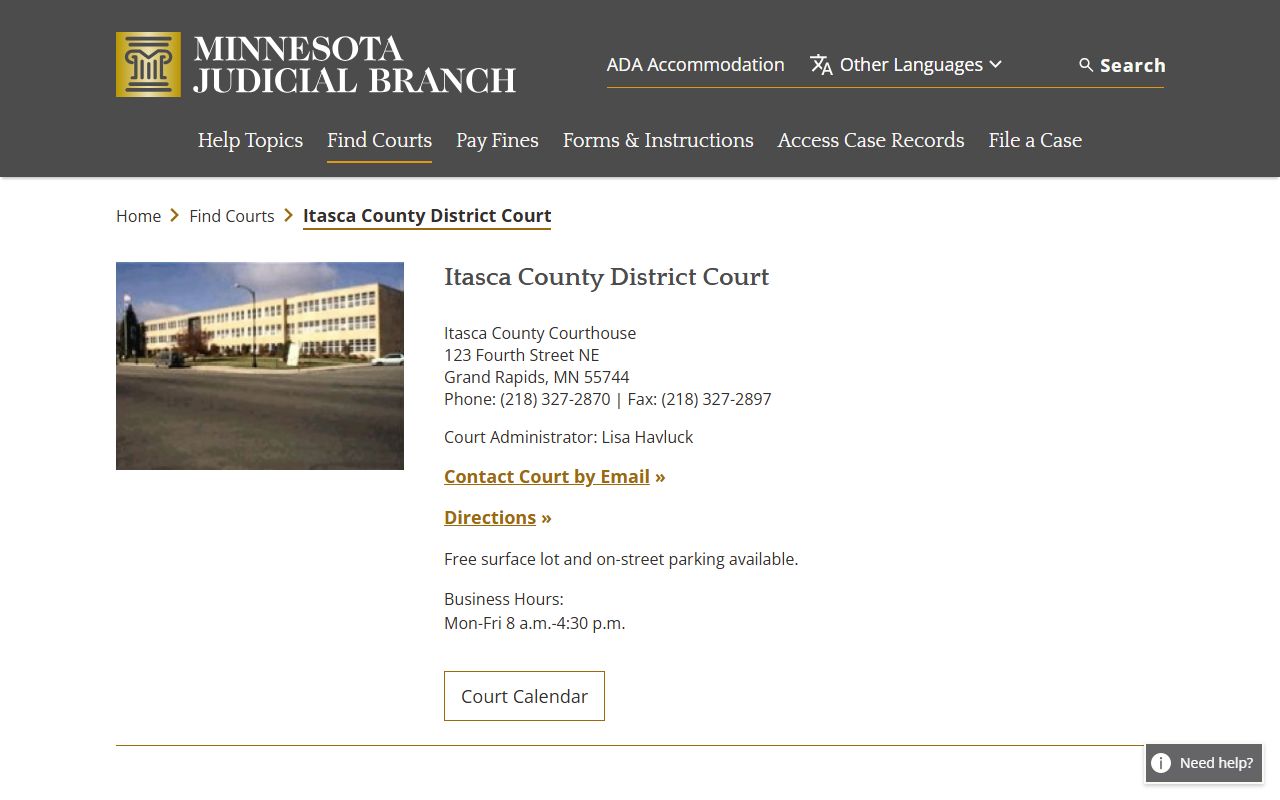
The page is the starting point for anyone who needs to contact the court or verify current hours before visiting Grand Rapids in person.
Creditor Claims and Time Limits
Creditors who want to file a claim against an Itasca County estate have limited time to act. Under Minn. Stat. § 524.3-803, the window is generally four months from the date the personal representative published notice, or one year from the date of death, whichever comes first. Once that window closes, most claims are barred. Heirs and personal representatives should understand these deadlines, as missing them can affect whether debts must be paid from the estate.
If you need legal help navigating an Itasca County estate, the Minnesota State Law Library is a free resource with access to statutes, court rules, and self-help materials. The full text of Minnesota's Uniform Probate Code is at Minn. Stat. Chapter 524.
Cities in Itasca County
Itasca County's county seat is Grand Rapids. Other communities in the county include Bovey, Coleraine, Deer River, and Bigfork. None of these cities meet the 100,000-population threshold for a dedicated city page, but all residents file probate matters at the District Court in Grand Rapids.
Nearby Counties
Itasca County borders several other Minnesota counties, each with its own District Court handling probate filings.